Why Invest in Robotics and Automation Technology?
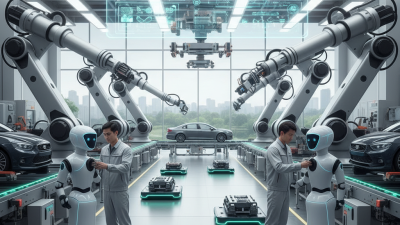
Robotics And Automation Technology is moving from isolated pilot projects into everyday industrial operations. A robotic arm now sorts parcels, welds vehicle frames, and inspects circuit boards under demanding production schedules. The International Federation of Robotics’ World Robotics 2024 report recorded 541,302 new industrial robot installations worldwide in 2023. It also reported an operational stock of approximately 4.28 million units. These figures show serious investment, not passing excitement.
The business case extends beyond faster production. Automation can improve repeatability, workplace safety, and quality tracking. The World Economic Forum’s Future of Jobs Report 2023 found that 44% of workers’ skills may be disrupted by 2027. That warning matters. Companies must fund training, not only machines. Marina Bill, President of the International Federation of Robotics, stated, “The global operational stock of industrial robots reached a new record of about 4.28 million units.” Her observation reflects a measurable shift across manufacturing economies.
Still, investment decisions should remain cautious. A robot may reduce manual handling, yet integration costs can surprise smaller firms. Software, maintenance, cybersecurity, and skilled technicians often determine whether automation succeeds. Poorly planned systems can create expensive bottlenecks instead of efficiency. This is the uncomfortable part. Robotics is powerful, but it is not automatically profitable. A reliable strategy begins with a clear production problem, credible data, and realistic workforce planning. That is where Robotics And Automation Technology becomes a long-term capability rather than an impressive showroom demonstration.
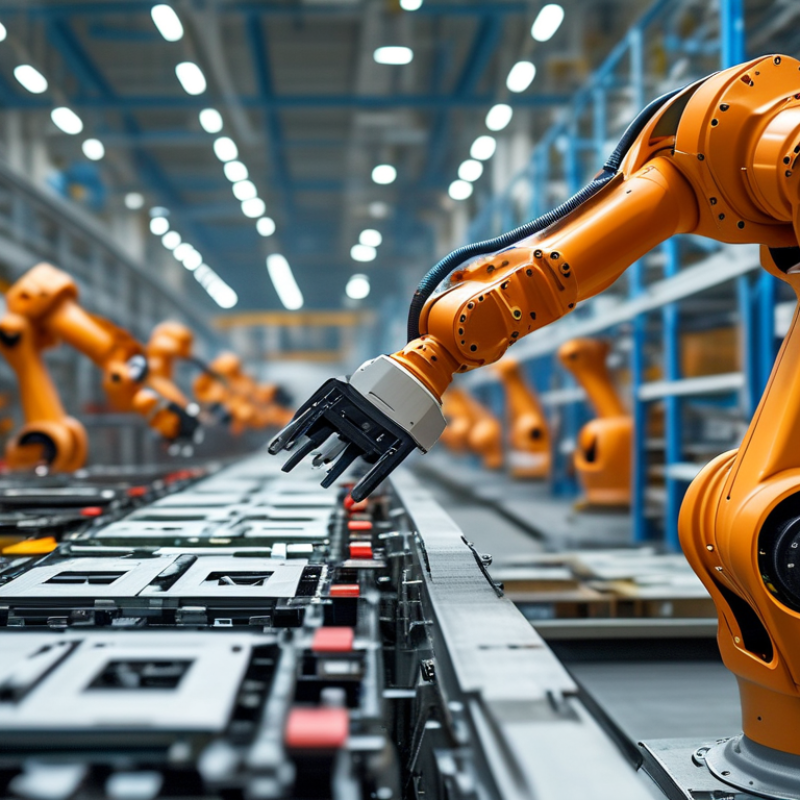
Robotics and Automation: Definitions, Scope, and Core Technologies
Why Invest in Robotics and Automation Technology?
Robotics combines machines, sensors, software, and controlled movement to perform physical tasks. Automation is broader. It includes software systems that manage decisions, workflows, and equipment with limited human input. A robotic arm may move a metal part, while an automated system schedules production and checks quality records.
The scope reaches factories, warehouses, laboratories, farms, hospitals, and public infrastructure. Core technologies include sensors, actuators, machine vision, motion controllers, industrial networks, and artificial intelligence. Sensors measure position, pressure, temperature, or distance. Actuators create movement. Cameras can detect scratches smaller than a fingernail. Control software then adjusts speed, force, or direction.
The investment case depends on a specific operating problem, not excitement about advanced machines. A repetitive packing task may justify automation after measuring labor time, errors, maintenance, and downtime. Safety systems also matter, including guarded zones, emergency stops, and controlled access. Reliable deployment requires trained operators and clear maintenance procedures. Human judgment remains important.
It is not always cheaper.
A poorly designed system can increase delays and create difficult repair work. Data quality may also be weaker than expected. Small production changes can expose this weakness. Decision-makers should test a limited process, record measurable results, and review failures honestly before expanding. Automation should improve working conditions and consistency, while leaving room for responsible human oversight.
Why Invest in Robotics and Automation Technology?
Industrial robot installations provide a measurable indicator of automation adoption across manufacturing. The long-term upward trend reflects growing investment in flexible production, machine vision, artificial intelligence, and connected control systems.
Data source: International Federation of Robotics, World Robotics 2024. Figures represent annual industrial robot installations worldwide, measured in thousands of units.
Global Adoption: 541,302 Industrial Robots Installed in 2023 (IFR)
Why Invest in Robotics and Automation Technology?
Global adoption is no longer a forecast. The International Federation of Robotics reported 541,302 industrial robots installed worldwide in 2023. That was only 2% below the 2022 record, showing strong demand despite economic uncertainty. Asia received about 70% of new installations, while China alone accounted for more than half. The installed global stock reached approximately 4.28 million machines. These figures suggest a structural shift, not a temporary equipment cycle.
The practical reasons are visible on factory floors. Robots repeat precise movements, handle heavy loads, and support safer production around heat, dust, or sharp materials. They also collect process data, helping engineers identify delays and quality variation. However, installation numbers can mislead. A robot does not automatically create efficiency. Poor integration, weak maintenance, or untrained operators can leave expensive equipment underused.
The World Economic Forum’s Future of Jobs Report 2023 expects 23% of jobs to change by 2027, with technology adoption among the main drivers. This does not mean simple replacement. In many facilities, workers are moving toward programming, inspection, troubleshooting, and process improvement. The transition remains uneven. Smaller manufacturers may face high upfront costs and limited technical talent. Careful pilot projects, measurable productivity targets, and ongoing workforce training make investment more credible. (Sources: International Federation of Robotics, World Robotics 2024; World Economic Forum, Future of Jobs Report 2023.)
Why Invest in Robotics and Automation Technology? — Global Adoption: 541,302 Industrial Robots Installed in 2023 (IFR)
| Data Dimension |
Year / Period |
Verified Figure |
Change or Comparison |
Business Relevance |
| New industrial robot installations worldwide |
2023 |
541,302 units |
2.1% lower than 2022 |
Global demand remained above half a million installations despite economic uncertainty and supply-chain adjustments. |
| New industrial robot installations worldwide |
2022 |
553,052 units |
Reference year |
Represents the previous global installation peak before the modest decline recorded in 2023. |
| New industrial robot installations worldwide |
2021 |
517,385 units |
6.9% lower than 2022 |
Shows that annual installations have remained structurally higher than pre-2021 levels. |
| New industrial robot installations worldwide |
2020 |
390,757 units |
32.4% lower than 2021 |
Provides a baseline for measuring the strong automation acceleration that followed. |
| New industrial robot installations worldwide |
2019 |
373,240 units |
Reference year |
Compared with 2023, annual installations increased by approximately 45.0%. |
| Five-year global installation growth |
2019–2023 |
Approximately 9.8% CAGR |
373,240 to 541,302 units |
Indicates sustained long-term expansion in industrial automation adoption. |
| Total installations over the latest five-year period |
2019–2023 |
2,375,736 units |
Combined annual installations |
Illustrates the scale of capital investment flowing into robotic production systems globally. |
| Operational industrial robot stock worldwide |
End of 2023 |
4,281,585 units |
10% increase year over year |
A growing installed base creates continuing demand for integration, maintenance, software, training, and upgrades. |
| Global robot density in manufacturing |
2023 |
162 robots per 10,000 employees |
Up from 151 in 2022 |
Demonstrates increasing automation intensity relative to the manufacturing workforce. |
| Market adoption signal |
2023 |
More than 1,480 units installed per day on average |
541,302 units ÷ 365 days |
Highlights the continuous and global nature of investment in robotic production capacity. |
Source: International Federation of Robotics (IFR), World Robotics 2024 and related 2023 global robotics statistics. Figures refer to industrial robots unless otherwise stated.
Investment Risks and Evaluation: Costs, Skills, Safety, and ROI Metrics
Why Invest in Robotics and Automation Technology?
Robotics can raise throughput, but the purchase price is only the visible cost. Integration, floor changes, software, maintenance, training, and production downtime also affect the budget. The International Federation of Robotics reported 541,302 industrial robots installed globally in 2023. That scale signals maturity, not guaranteed returns. Each project still needs a measured baseline for cycle time, labor hours, defects, energy use, and downtime.
Skills may become the quietest risk.
The World Economic Forum’s Future of Jobs Report 2023 estimated that 44% of workers’ core skills could change by 2027. Operators need practical training in programming, troubleshooting, data review, and safe intervention. A rushed rollout creates dependence on a few specialists. That is fragile. Safety reviews should cover guarding, emergency stops, access points, human-machine interaction, and documented procedures aligned with applicable standards such as ISO 10218. I have seen teams measure speed carefully, yet treat safety training as a final checkbox.
ROI should use operational evidence, not optimistic promises.
Track overall equipment effectiveness, first-pass yield, scrap cost, unplanned stoppages, changeover time, and labor redeployment. Calculate payback after support costs, not before them. A simple model compares annual verified savings with total ownership cost. Results should be tested against a conservative scenario, perhaps with lower utilization and longer commissioning.
The uncomfortable question remains: if demand falls, can the system still create value?

 High Quality
 High Performance
 Technology Support