How to Use Magnetic Separation for Efficient Material Processing?
Magnetic separation is a vital process in material processing, widely recognized for its efficiency and effectiveness. Dr. Emily Carter, a leading expert in the field of magnetic separation, once stated, "Effective material processing relies heavily on the proper application of magnetic technologies." Her words highlight the growing importance of this innovative method in various industries.
Magnetic separation utilizes magnetic forces to isolate different materials based on their magnetic properties. This technique plays a crucial role in recycling, mining, and even food processing. The ability to separate ferrous and non-ferrous materials enhances operational efficiency. However, it’s not without its challenges. The effectiveness of magnetic separation can vary based on material composition and environmental factors.
As industries evolve, so do the methods employed in material processing. Experts like Dr. Carter continuously seek to refine these techniques. Despite progress, achieving optimal results remains an ongoing pursuit. By understanding the nuances of magnetic separation, companies can significantly improve product recovery rates and reduce waste. This not only enhances productivity but opens the door to sustainable practices across various sectors.
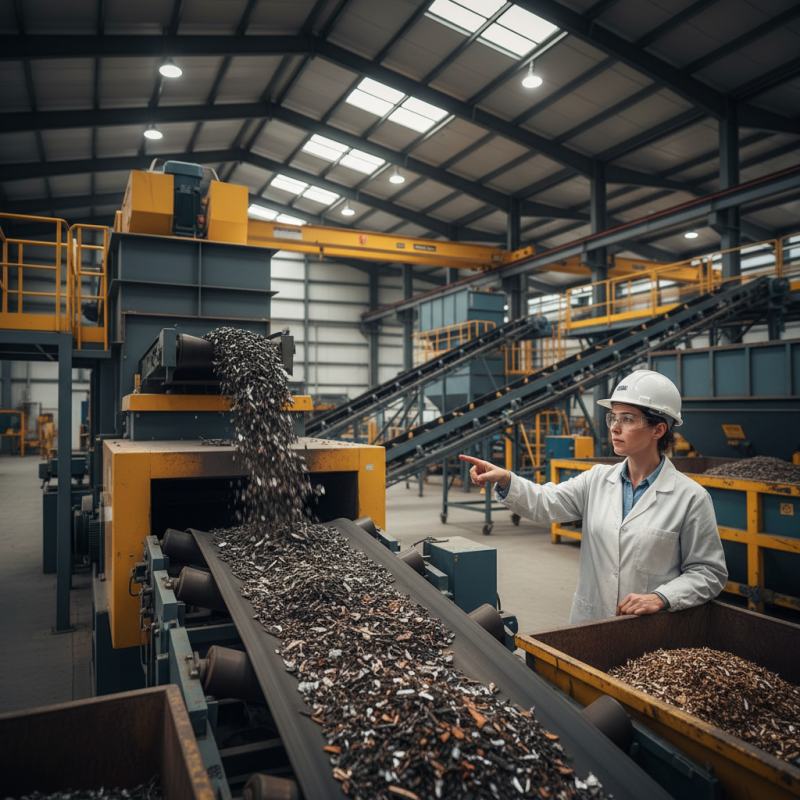
Understanding Magnetic Separation: Principles and Mechanisms
Magnetic separation is a powerful technique used in material processing. Its effectiveness lies in the principles and mechanisms that govern it. Essentially, this method relies on the differences in magnetic properties among materials. Magnetic particles respond to applied magnetic fields, while non-magnetic materials do not. This fundamental difference helps in segregating desired materials from contaminants.
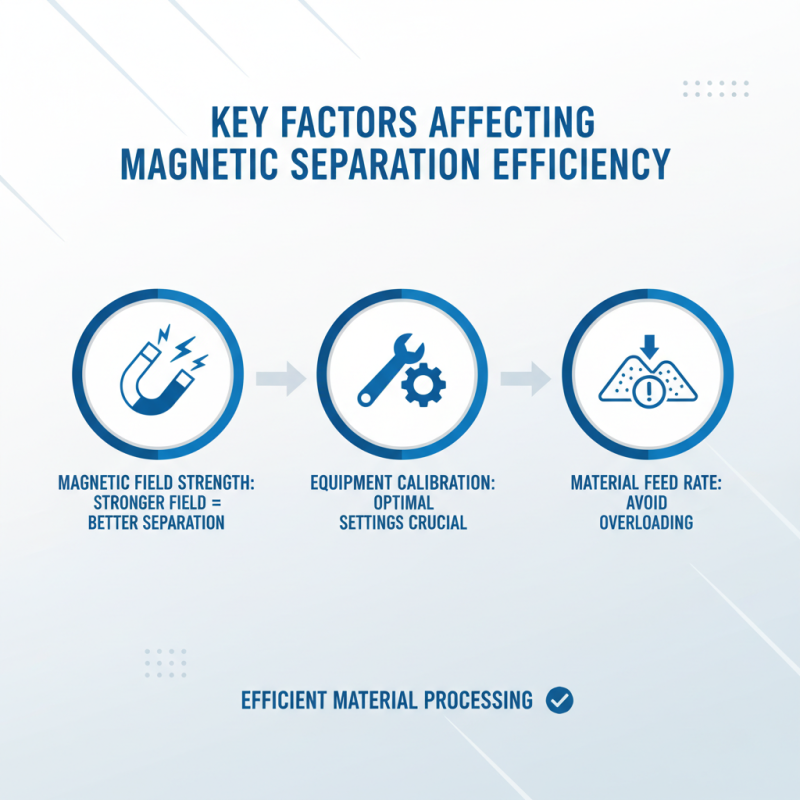
The process begins with the introduction of a magnetic field to the mixture. Magnetic particles are attracted and held onto the magnetic separator. However, not all magnetic materials behave similarly. Some may require a stronger field for effective separation. This variability can influence the efficiency of the process and should be taken into account.
In practice, operators often face challenges. For instance, fine particles may clump together, creating separation difficulties. Adjusting the magnetic field strength and speed can mitigate these issues, but it may not always yield perfect results. Continuous monitoring and adjustments are essential for constant improvement. This highlights that while magnetic separation is efficient, it is not devoid of complexities and requires expertise to optimize.
Material Processing Efficiency Using Magnetic Separation
Types of Magnetic Separators and Their Applications in Industry
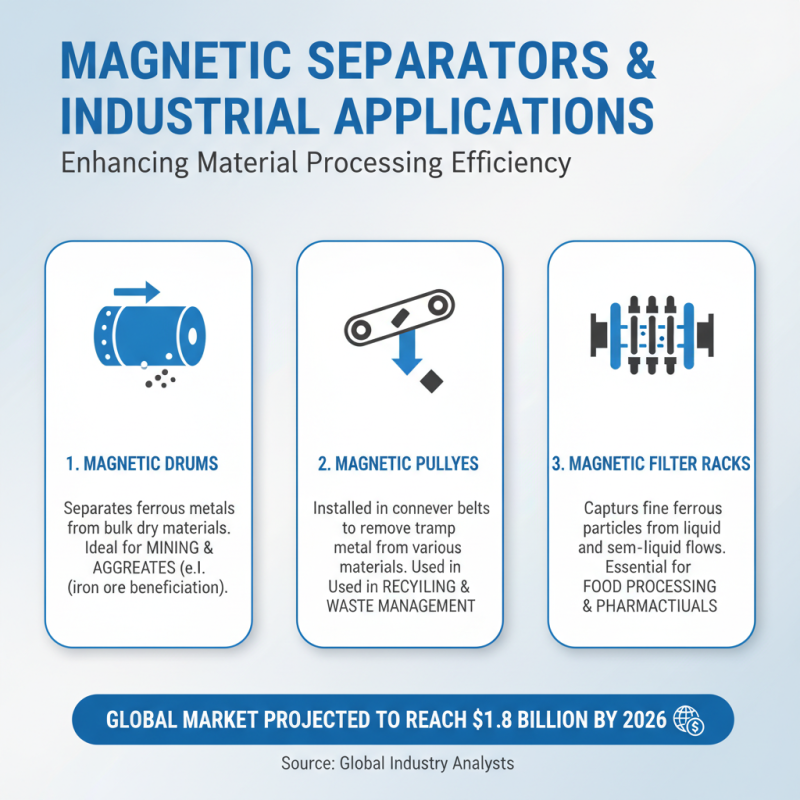
Magnetic separation is a vital technology in various industries, including mining, recycling, and food processing. Understanding the types of magnetic separators can enhance material processing efficiency significantly. There are mainly three types: magnetic drums, magnetic pulleys, and magnetic filter racks. Each type exhibits unique features suitable for specific applications. For instance, magnetic drums are commonly used in mining. According to a report by Global Industry Analysts, the global magnetic separation equipment market is projected to reach $1.8 billion by 2026.
In recycling operations, magnetic pulleys are often employed to remove ferrous materials from non-ferrous ones. They play a crucial role in safeguarding equipment downstream. A survey from the Institute of Scrap Recycling Industries indicates that improved separation techniques could boost recycling rates by up to 25%. Meanwhile, magnetic filter racks are essential in food processing to ensure the purity of products. Failure to implement proper separation techniques can lead to contamination and financial losses.
Despite their effectiveness, the choice of magnetic separator can be complex. Factors like material type and operational costs require deep industry insight. The effectiveness of a magnetic separator often depends on correct installation and maintenance, which many operators overlook. Continuous training and awareness are essential to optimize magnetic separation technology in any facility.
Case Studies: Advances in Magnetic Separation Technologies
Advancements in magnetic separation technologies have significantly transformed material processing across various industries. Recent studies indicate that up to 90% of ferrous materials can be efficiently removed using modern magnetic separators. This high efficiency is crucial in sectors like recycling, mining, and food processing, where purity is essential. For instance, in the recycling industry, implementing magnetic separation systems has led to a 30% increase in recovered metals, highlighting its economic viability.
In one notable case, a mining operation successfully integrated advanced magnetic separation techniques into its workflow. Reports show that this approach reduced waste by 40% while improving ore recovery rates by 25%. However, challenges remain. The initial investment for these technologies can be steep, leading some companies to hesitate. Moreover, selecting the right type of magnetic separator requires in-depth knowledge and expertise, as not all systems yield the same results across different materials.
As industries continue to evolve, ongoing research is crucial. Emerging technologies aim to enhance the efficiency of magnetic separation even further, but some limitations are still present. Understanding the specificities of each application is vital to avoiding pitfalls. Thus, companies must continually adapt and refine their processes to harness the full potential of magnetic separation.
Future Trends and Innovations in Magnetic Separation for Material Processing
As industries evolve, magnetic separation technology has gained traction. A recent report from the International Journal of Mineral Processing highlights a projected market growth of 9% annually through 2026. This growth reflects the increasing focus on sustainable and efficient material processing.
Innovations in magnetic separation include the introduction of smart sensors and real-time monitoring systems. These advancements enhance separation efficiency and reduce operational costs. New materials, such as rare-earth magnets, offer stronger magnetic fields, improving the separation of fine particles. Integrating AI with magnetic separation processes can further optimize performance,
predicting maintenance needs and minimizing downtime.
Tip: Consider implementing
pilot projects to test new technologies. This allows for assessing the real-world impact before full-scale adoption.
The challenge lies in adapting existing systems to these innovations. Existing equipment might require retrofitting, which can be costly and time-consuming. However, the
long-term benefits often outweigh the initial hurdles. Regularly reassessing operational efficiency can highlight areas for improvement.
Tip:
Collaborate with specialists to stay ahead. Their insights into the latest advancements can drive better decision-making in equipment choices.

 High Quality
 High Performance
 Technology Support