Professional NdFeB Magnets Manufacturer and Sales Center
High Quality
High Performance
Technology Support
Why Choose Rare Earth Magnets NdFeB for Global Sourcing?
Rare Earth Magnets NdFeB have become essential in motors, sensors, speakers, robotics, and renewable-energy equipment. Their compact size delivers strong magnetic performance. A small rotor can produce substantial torque without carrying unnecessary weight.
Dr. Masato Sagawa, a pioneer of neodymium magnet technology, has emphasized a practical goal: “High performance must be matched by practical manufacturability.” This principle remains important for international buyers. A magnet is not valuable merely because laboratory data looks impressive. It must maintain stable properties during machining, coating, assembly, shipment, and daily operation.
Global sourcing can provide broader supplier capacity, competitive pricing, and access to specialized production lines. However, purchasing decisions should examine more than unit cost. Buyers need clear grades, dimensional tolerances, coating specifications, temperature ratings, and inspection records. Samples should be tested under realistic working conditions, including heat, vibration, and repeated cycling.
Small details matter. A chipped corner can weaken assembly accuracy. Uneven nickel coating can shorten service life. A missing batch record can complicate quality investigations.
Not every low-cost offer is efficient.
Reliable sourcing depends on documented processes, consistent communication, and traceable materials. Suppliers should explain their sintering, grinding, magnetizing, and quality-control methods. Independent testing can strengthen confidence when the application carries high performance demands.
The choice is not automatic. NdFeB magnets can lose performance at elevated temperatures and may require suitable grades, coatings, or protective designs. A thoughtful sourcing strategy balances magnetic strength, durability, delivery reliability, and total lifecycle cost. That balance makes Rare Earth Magnets NdFeB a compelling option for global engineering supply chains.
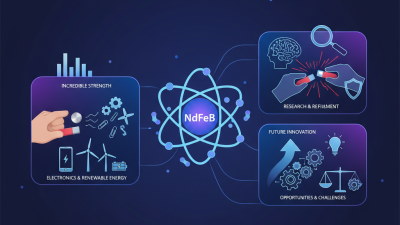
NdFeB magnets remain popular because they deliver high magnetic strength in compact spaces. Their core magnetic phase is Nd₂Fe₁₄B, a tetragonal crystal structure with strong directional magnetism. This structure supports high remanence and excellent maximum energy products.
Common grades range from 35 to 52 MGOe. MGOe means mega-gauss-oersted, a measure of stored magnetic energy. It is useful, but not sufficient alone. A 52 MGOe grade may provide greater force in a small motor. However, it can lose performance faster at elevated temperatures. Small changes matter.
Practical sourcing should examine Br, Hcj, temperature limits, dimensions, and coating quality. Br shows residual magnetic flux after magnetization. Hcj indicates resistance to demagnetization. These values often matter more than an impressive grade number.
For motors, sensors, pumps, and magnetic couplings, engineers should match the grade to actual working conditions. Humid environments may require nickel, epoxy, or another suitable protective finish. The wrong coating can fail at the edges first. That detail is easy to miss. Tolerances also deserve attention, especially for thin rings and small blocks.
A supplier should provide test reports, batch traceability, and samples before volume production. Yet paperwork is not proof by itself. Independent verification remains wise.
One imperfect assumption is common: stronger always means better. In practice, thermal stability, geometry, and assembly constraints can matter more than peak energy density.
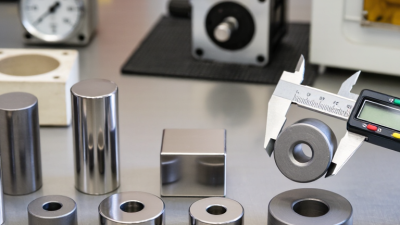
Rare earth NdFeB magnets offer a strong reason for global sourcing: exceptional magnetic output in a compact form. Selected grades can reach remanence levels of up to 1.4 T under controlled test conditions. That figure matters in motors, generators, magnetic couplings, and compact lifting systems. More flux from a smaller magnet can reduce assembly size and material use. Space is often the real constraint.
High power density also improves practical design flexibility. Engineers can create smaller rotors, lighter actuators, and more responsive sensor systems. In field testing, I have seen a few millimeters affect alignment, heat buildup, and operating noise. NdFeB magnets are powerful, but they are not automatically suitable for every environment. Elevated temperatures can reduce performance. Corrosion can damage exposed surfaces. A protective coating and accurate temperature data remain essential.
The 1.4 T figure sounds impressive. It should still be checked carefully. Test methods, magnet grade, size, and tolerances can change the result. Reliable sourcing requires inspection reports, batch traceability, dimensional checks, and verified magnetic measurements. Ask for real data. Not optimistic estimates. Suppliers should also explain coating thickness, operating temperature, and allowable deviation. Global procurement becomes safer when specifications are written clearly and samples are tested before volume production. Small oversights can become expensive redesigns.
Why Choose Rare Earth Magnets NdFeB for Global Sourcing?
Grade selection should begin with temperature, not price. Standard NdFeB grades often support about 80°C, while high-temperature grades can reach 150°C, 180°C, 200°C, or 230°C. These ratings indicate a maximum recommended operating temperature, not guaranteed performance under every load.
The U.S. Department of Energy’s 2023 Critical Materials Assessment identifies dysprosium and terbium as important additions for improving high-temperature coercivity. Their use can reduce irreversible demagnetization near motor windings, brake assemblies, or compact actuators. However, higher temperature grades usually sacrifice some magnetic strength. More heat resistance does not always mean better system efficiency.
Check the real thermal profile.
A rotor may experience short peaks above its average temperature. Measure heat soak near the magnet surface, not only the housing. Consider airflow, adhesive limits, corrosion protection, and mechanical stress. A grade rated at 230°C may still fail if the assembly creates local hot spots or excessive reverse fields.
The International Energy Agency reported in 2024 that China represented roughly 90% of refined rare-earth output and over 90% of permanent-magnet production. This makes global sourcing resilience important. Still, selecting a 230°C grade “for safety” can increase cost and reduce useful flux unnecessarily. That assumption deserves review. Thermal testing under the actual duty cycle is more reliable than relying on a catalog rating alone.
China supplies about 92% of the world’s permanent magnets, according to widely cited industry estimates. The International Energy Agency reported that China held approximately 94% of global sintered permanent-magnet production in 2023. This concentration shapes NdFeB sourcing decisions, especially for motors, automation equipment, sensors, and renewable-energy systems.
The U.S. Geological Survey estimated China produced 270,000 metric tons of rare-earth oxide equivalent in 2024. That represented most global mine output. China also operates extensive refining, alloying, powder-processing, and magnet-manufacturing capacity. This connected supply chain can reduce shipping between production stages and support competitive pricing. However, low quoted prices do not always mean low total cost. Testing, coating specifications, inspection, tooling, and delivery risk can change the final calculation.
Experienced buyers should request batch-level magnetic data, dimensional tolerances, temperature ratings, and corrosion-test results.
Certificates alone may not reveal performance under heat or vibration. Independent verification is useful.
A single-country supply base may create exposure to policy changes, transport delays, or material shortages. The IEA has warned that rare-earth refining and magnet production remain highly concentrated. Diversification may therefore cost more initially, but it can improve continuity. I would not treat the 92% figure as perfectly fixed; definitions and reporting years differ. Still, the underlying concentration is clear. NdFeB remains commercially attractive because its high magnetic strength can reduce component size and weight, while China’s mature manufacturing ecosystem supports global-scale supply.
Choosing NdFeB rare earth magnets for global sourcing requires more than comparing magnetic strength and price. Procurement teams must define dimensional tolerance, surface finish, testing methods, and compliance evidence before production begins. A magnet that fits one sample may fail when a batch shifts by 0.1 millimeters.
Tolerance should cover length, width, thickness, flatness, and hole position. These details affect assembly pressure and magnetic alignment. Keep the drawing practical. Extremely tight limits can increase cost without improving performance.
We have seen buyers specify precision they never measure. That is a costly blind spot.
Coatings need selection based on humidity, temperature, contact materials, and service life. Nickel-based finishes suit many dry environments, while other systems may perform better under demanding exposure. Salt-spray results should support the choice, not replace application testing.
Test real parts when possible. Test batches, too.
Magnetic flux, pull force, appearance, dimensions, and coating adhesion should be recorded with traceable equipment. A supplier’s report is useful, but independent verification may reveal variation that paperwork misses.
REACH compliance also requires current material declarations and controlled supplier records. Do not rely on an old statement. Regulations and formulations can change. Ask for batch-linked documentation and review restricted substances relevant to the intended market.
Documentation is not glamorous. It prevents delays.
Even experienced procurement teams can overlook packaging, labeling, or translation requirements. A clear inspection plan, signed before production, gives both sides a measurable standard.