Professional NdFeB Magnets Manufacturer and Sales Center
High Quality
High Performance
Technology Support
Rare Earth Permanent Magnets power compact motors, sensors, speakers, and wind-turbine generators. Yet buying the right magnet involves more than choosing a grade or comparing prices. A small neodymium magnet can feel strong in your hand and still fail in a hot motor housing. Details matter.
The U.S. Geological Survey’s Mineral Commodity Summaries 2025 estimates 2024 rare-earth mine production at about 390,000 metric tons worldwide, measured in rare-earth-oxide equivalent; China accounted for about 270,000 metric tons. These figures describe mined material, not finished magnet output. That distinction is easy to miss. It also explains why buyers should ask about material origin, production lead times, and supply continuity—not just a quoted unit cost.
This guide presents ten practical checks for purchasing magnets with fewer surprises. Compare magnetic grade, dimensions, tolerances, operating temperature, and coating against the actual application. Ask for test documentation, batch traceability, and clear definitions of performance. A shiny nickel coating is not proof of corrosion resistance in every environment. Nor does a higher grade automatically mean a better fit. Sometimes buyers overlook the mounting method or nearby heat source. I have seen those details matter more than the brochure suggests. Start with the working conditions, then confirm the specifications with a qualified supplier. It takes a little longer. Usually worth it.
Before requesting a quote, define what the magnet must do in the assembled device. Specify the required flux density or holding force at the working gap, not just a grade or maximum energy product. Record the air gap, magnet shape, nearby steel, and direction of magnetization. These details change the field at the part. Also set minimum and maximum temperatures, duty cycle, vibration, and exposure to moisture or chemicals. A magnet that performs well on a bench may weaken in a hot motor or corrode near a washdown area.
Separate room-temperature figures from operating limits. Remanence (Br) affects available flux; intrinsic coercivity (Hcj) helps resist demagnetization; maximum energy product (BHmax) indicates energy density. Ask for these values across your temperature range, with tolerances and test conditions. Small detail. Yet easy to miss. The U.S. Department of Energy’s 2023 Critical Materials Assessment identifies rare earth permanent magnets as important to clean-energy technologies, while the USGS Mineral Commodity Summaries 2025 estimates 2024 global rare-earth mine production at 390,000 metric tons. That supply context does not specify magnet performance, but it supports checking lead times alongside technical requirements. Leave a safety margin, then validate a sample in the real assembly; calculations alone can miss heat buildup or an unexpected magnetic path.
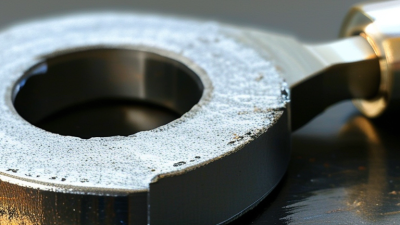
Rare-earth magnets are not interchangeable. Neodymium-iron-boron magnets usually offer stronger pull for their size, making them useful in compact motors and sensor assemblies. Samarium-cobalt magnets can retain performance at higher temperatures and resist corrosion better, but they are often more expensive and brittle. Choose by the operating conditions, not by strength alone. A magnet beside a warm motor may behave differently from one tested on a cool workbench.
Grades need careful reading. For neodymium magnets, labels such as N35 or N52 roughly indicate maximum energy product; a higher number does not guarantee the best choice. Coercivity and temperature rating matter too. Ask for the full grade data and the recommended maximum operating temperature. Check the details. A small test piece can reveal fit and holding force before a large order, though it cannot replace proper application testing.
Coatings protect magnets from damage, but each has limits. Nickel-copper-nickel is a common finish for indoor use; epoxy may suit humid conditions when its edges remain intact. Salt spray, abrasion, and repeated impacts can still cause failure. SmCo often needs less corrosion protection, but its surface and application should still be reviewed. I have seen coating descriptions treated like guarantees. They are not. Match the finish to the actual environment, including cleaning chemicals and condensation.
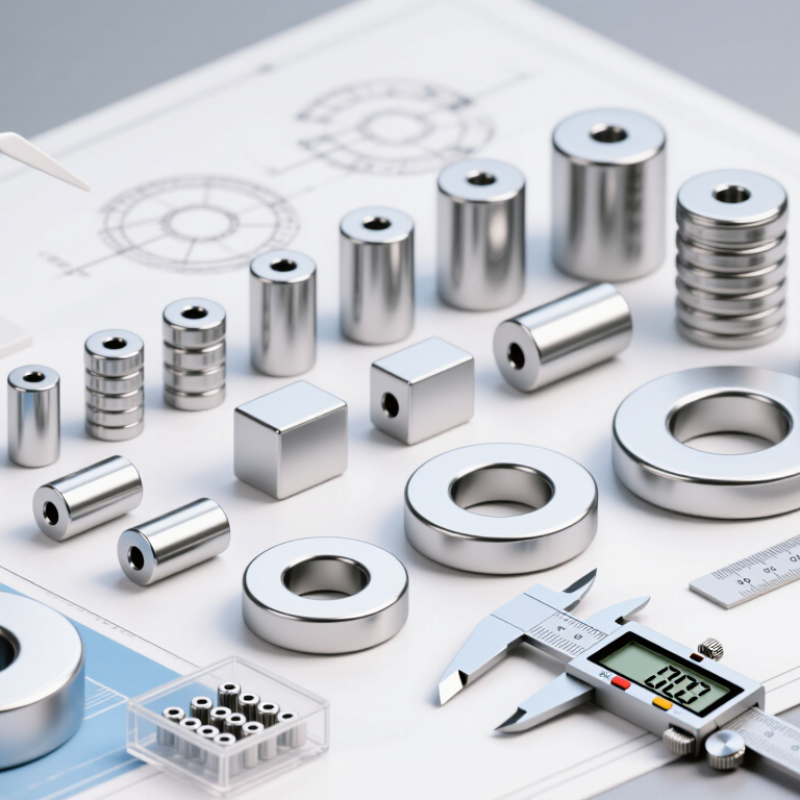
Start with the space available in the finished assembly, not just the magnet’s listed dimensions. Measure the pocket, air gap, and nearby moving parts with a caliper. A few millimeters can change whether a magnet seats cleanly or rubs against a housing. Small gaps matter. Choose a shape that fits the load path: blocks suit flat contact areas, while discs can work in compact round recesses. Check whether the magnet must attract through a cover or hold against sliding, not just pull straight away.
Specify tolerances for length, width, thickness, and hole position where these affect assembly. Do not guess. Ask how the supplier defines the stated tolerance, and allow room for coatings, adhesive, or a retaining clip. Rare-earth magnets are hard but brittle; a tight press fit can chip an edge. Plan installation around the actual method, such as bonding or mechanical capture, and check that the magnet cannot shift during use. Also confirm operating temperature and exposure to moisture, since these can affect performance or corrosion resistance. It is easy to overfocus on the drawing. Recheck the physical assembly, because real parts and neat measurements do not always agree.
This illustrative design compares tolerance allowances for three magnet dimensions. Confirm the supplier’s achievable tolerances and account for the full tolerance stack when checking fit, clearance, and installation requirements; these values are examples, not universal manufacturing standards.
A supplier’s datasheet is a starting point, not proof that every shipment will perform as promised. Ask for lot-specific test reports showing remanence, coercivity, and maximum energy product. These values matter when a magnet must hold force inside a warm motor housing. Check the stated test temperature and method, too. Results from different conditions may not be directly comparable.
Look for traceability from the finished magnet back to its material batch. A practical receiving check can compare the lot number on the carton, inspection report, and certificate. Measure dimensions and coating condition on a sample; a chipped edge or thin coating can create problems later. For critical uses, discuss corrosion testing and temperature limits before ordering. A polished report alone is not enough.
Verify that product certificates match the exact grade, facility, and process being supplied. Quality-system certification can show that procedures are documented, but it does not guarantee a particular magnet’s performance. Ask who performed the tests, whether equipment is calibrated, and how failed lots are handled. It is tempting to treat paperwork as certainty. It isn’t. I would also clarify what happens when incoming results differ from the report; buyers sometimes leave this awkward detail until too late.
A low unit price can hide costs that appear later. Compare the full order, including machining, protective coating, inspection, packaging, and shipping. Ask how rejected parts are handled and whether replacements affect production schedules. For a small prototype, a slightly higher price may be reasonable if the supplier provides clear test data. I have seen estimates change once tight tolerances enter the discussion.
Safety deserves attention before magnets arrive. Strong pieces can snap together suddenly, pinch fingers, or chip on impact. Use nonmagnetic spacers during handling, keep magnets away from sensitive electronics, and store them securely. That matters. Specify the intended use and working environment so the supplier can recommend suitable dimensions, coating, and handling guidance.
Long-term reliability depends on more than the stated magnetic grade. Check operating-temperature limits, corrosion resistance, dimensional tolerances, and consistency between production lots. Request relevant inspection records, and test sample parts under realistic load and temperature conditions when possible. A coating can look intact yet fail in a damp application. I would not treat one successful sample as proof that every future batch will perform identically; record results and review them against your actual requirements.