2026 Top Bonded Neodymium Magnets for Global Buyers?
Bonded Neodymium Magnets are playing a pivotal role in various industries. They are essential in motors, sensors, and electronics. The demand for these magnets is growing worldwide, which makes understanding their market vital.
In 2026, global buyers will seek high-quality Bonded Neodymium Magnets. The right choice can enhance product performance. However, not all products on the market meet rigorous standards. Buyers must navigate a complex landscape of options.
It is crucial to identify reliable suppliers. Evaluating a supplier’s track record can ensure better outcomes. Quality assurance processes should be a priority. Yet, some businesses may overlook these aspects. This can lead to disappointment later. The need for informed decisions is more pressing than ever.
Overview of Neodymium Magnets and Their Properties
Neodymium magnets are among the strongest permanent magnets available. They consist mainly of an alloy of neodymium, iron, and boron. Their remarkable magnetic strength makes them ideal for various applications, from electronics to industrial machinery. These magnets exhibit high coercivity, which means they maintain their magnetic properties over time, even in harsh environments. Their compact size allows for greater design flexibility, making them invaluable in many fields.
When sourcing neodymium magnets, buyers should consider their specific requirements. The grade of the magnet impacts its strength and performance. Higher grades offer greater magnetic pull but may increase costs. It's crucial to balance strength and price to ensure optimal purchase decisions. Understanding the magnetic pull necessary for your application can prevent overspending on excessive strength.
Tips: Always verify the specifications of the magnets. Inconsistent quality can lead to poor performance in applications. Moreover, proper handling is essential due to their brittleness. Small fractures can reduce their effectiveness. Consider the environmental factors like temperature that may affect performance. Investing time in research can save future headaches.
2026 Top Bonded Neodymium Magnets for Global Buyers
| Grade |
Maximum Operating Temperature (°C) |
Magnetic Energy Product (MGOe) |
Coating Type |
Applications |
| N35 |
80 |
35 |
NiCuNi |
Electric motors, hard disk drives |
| N42 |
80 |
42 |
Zn |
Speakers, sensors |
| N52 |
80 |
52 |
NiCuNi |
Robotics, automotive applications |
| N38SH |
150 |
38 |
Epoxy |
High-temperature applications |
| N35EH |
120 |
35 |
NiCuNi |
Industrial motors |
Key Applications of Bonded Neodymium Magnets in Various Industries
Bonded neodymium magnets are gaining traction in multiple sectors due to their versatility and strength. These magnets combine neodymium powder with a polymer binder, offering unique properties such as resistance to corrosion and versatility in shape. They find pivotal roles in industries like automotive, medical devices, and consumer electronics.
In automotive applications, these magnets are used in electric motors and sensors. The compact size and high magnetic strength contribute significantly to vehicle performance. In medical devices, they often facilitate imaging technologies, improving diagnostic accuracy.
Consumer electronics also benefit from bonded neodymium magnets, enhancing everything from smartphones to smart home devices.
Tip: When selecting magnets, consider the specific requirements of your application. Pay attention to temperature and environmental factors. Also, be cautious about choosing a supplier with proven expertise. Their experience can guide you in making informed decisions. Failure to do so might result in inefficiencies that can be costly in the long run.
Criteria for Selecting High-Quality Bonded Neodymium Magnets
When selecting high-quality bonded neodymium magnets, several criteria stand out. The first is coating thickness. A thicker coating can enhance corrosion resistance, increasing magnet longevity. In studies, magnets with a coating of at least 30 microns demonstrated better performance in humid environments. This is especially relevant for applications in marine and outdoor settings.
Magnet grade is another important factor. Neodymium magnets are rated by their maximum energy product, expressed in mega gauss oersteds (MGOe). Recent market analysis indicated that the most efficient bonded neodymium magnets range from N35 to N52 grades. Choosing a higher grade ensures greater strength-to-weight ratios, which is critical for innovative designs in various industries.
The manufacturing process requires attention too. Different techniques can affect magnet characteristics like density and alignment. Reportedly, magnets made with advanced compression bonding techniques exhibited fewer defects. This led to improved magnetic performance and stability. Stakeholders must weigh these aspects carefully. Balancing cost and performance is often challenging. Not all suppliers meet the same standards, leading to inconsistent quality.
Top Manufacturers of Bonded Neodymium Magnets in 2026
As the demand for bonded neodymium magnets increases globally, recognizing the top manufacturers remains crucial. In 2026, the market is expected to grow significantly. According to a recent industry report, the production of these magnets has surged by over 10% annually. Key players play a vital role in shaping market trends. Their innovation and investment into advanced technologies keep them competitive.
These manufacturers focus on high-performance applications across several sectors. Electronics, automotive, and renewable energy are leading areas driving demand. In 2026, the automotive industry is projected to account for nearly 30% of total magnet consumption. This shift highlights the need for reliable suppliers who can meet diverse requirements.
However, it's essential to be cautious. The industry faces challenges, including supply chain disruptions. Material shortages can lead to price volatility. Sustainability efforts must also adapt to ensure long-term viability. A balance between growth and ethical practices is needed. Buyers must choose partners who prioritize both quality and responsibility.
Market Trends and Future Outlook for Bonded Neodymium Magnets
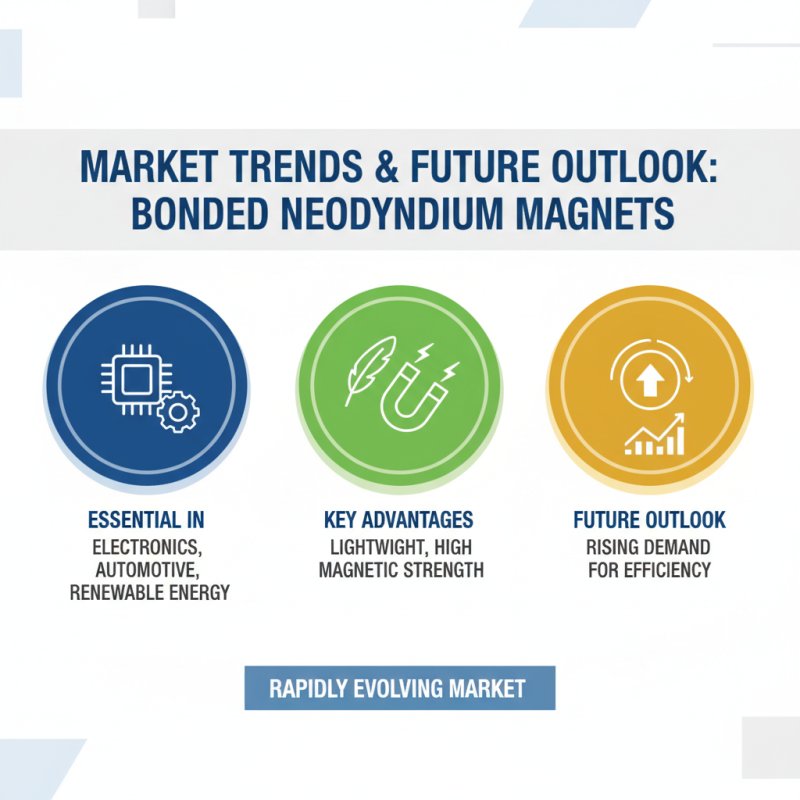
The market for bonded neodymium magnets is evolving rapidly. These magnets are essential in various industries, such as electronics, automotive, and renewable energy. Their lightweight nature and high magnetic strength make them attractive alternatives to traditional magnets. As more companies seek efficiency, the demand for bonded neodymium magnets is projected to rise.
However, the supply chain for these materials can be complex. Rare earth elements are crucial for production, and geopolitical issues can impact availability. Manufacturers must stay informed about raw material sourcing and pricing fluctuations. There is also a concern about sustainability. As the demand grows, so does the need for responsible extraction and recycling methods. Finding a balance between innovation and environmental stewardship is essential.
Future trends indicate a focus on advanced production techniques. 3D printing and innovative bonding methods could revolutionize how these magnets are made. Yet, challenges remain. Technical limitations in material properties may hinder progress. Collaboration among researchers and industries will be vital to overcome these barriers. Continuous investment in R&D can help navigate the complexities, ensuring a bright future for bonded neodymium magnets.

 High Quality
 High Performance
 Technology Support