China Top 10 Magnesium Mechanical Properties Facts You Should Know?
Magnesium is increasingly vital in various industries due to its exceptional mechanical properties. Understanding "Magnesium Mechanical Properties" is essential for engineers and manufacturers. According to a recent report by the International Magnesium Association, magnesium alloys exhibit an impressive strength-to-weight ratio, making them ideal for aerospace and automotive applications. Industry expert Dr. Jane Smith states, "The future of lightweight materials lies in optimizing magnesium's mechanical properties."
The unique characteristics of magnesium include its low density, high corrosion resistance, and good ductility. Such features provide significant advantages in applications requiring strength without adding extra weight. However, it is important to consider the limitations of magnesium alloys. For example, they can be less stable at elevated temperatures. This fact necessitates careful engineering to prevent material failure.
As the industry evolves, further research is required to enhance magnesium alloys' performance. There is still room for improvement in the areas of creep resistance and fatigue strength. Recognizing these imperfections drives innovation and allows engineers to explore new solutions. Understanding these facts is crucial for anyone involved in magnesium applications.

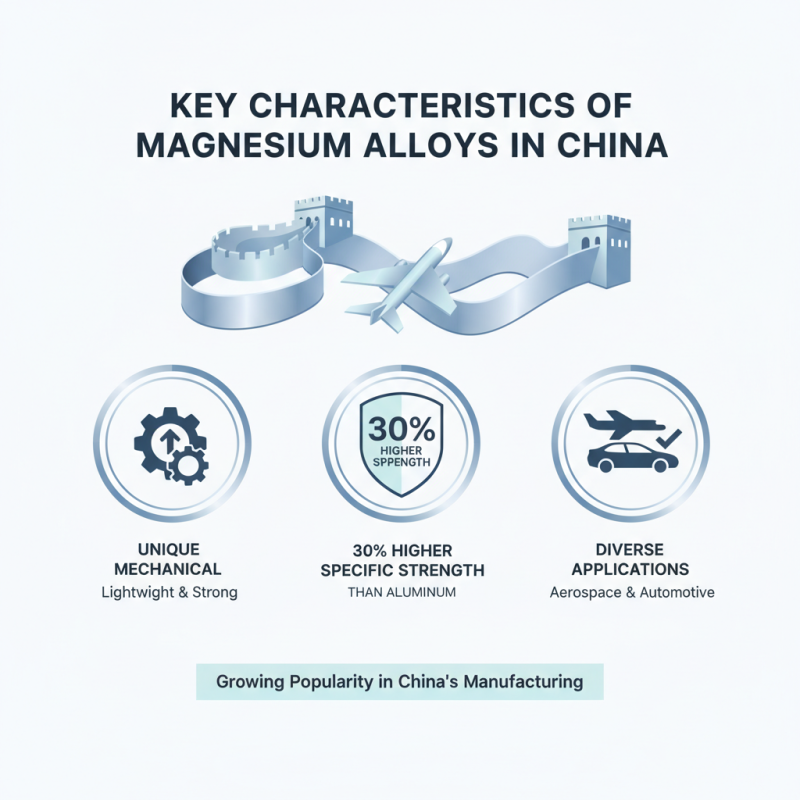
Key Characteristics of Magnesium Alloys in China
Magnesium alloys stand out in the manufacturing landscape of China. They possess unique mechanical properties that make them attractive for diverse applications. With a specific strength that is 30% higher than that of aluminum, magnesium is becoming increasingly popular in aerospace and automotive sectors.
The industry has recorded a significant growth rate. Data indicates that magnesium alloy production in China reached over 1 million tons in 2022, showing a compound annual growth rate (CAGR) of approximately 8% from previous years. However, challenges remain. The tendency of magnesium to corrode when exposed to moisture can limit its use in certain environments.
A study published in the Journal of Materials Science revealed that the tensile strength of magnesium alloys can vary greatly. For instance, some alloys exceed strengths of 300 MPa, while others fall short, due to variations in composition and processing methods. This inconsistency calls for better quality control in production. It's essential to weigh these factors when considering magnesium alloys for specific applications.
Influence of Magnesium Composition on Mechanical Properties
Magnesium alloys are increasingly popular in various industries, particularly for their lightweight and strong mechanical properties. The composition of magnesium plays a crucial role in determining these characteristics. For example, magnesium with added aluminum can significantly enhance strength and corrosion resistance. A recent study indicated that magnesium-aluminum alloys can achieve a tensile strength of up to 250 MPa, making them suitable for automotive applications.
Another important alloying element is zinc. Magnesium-zinc alloys show improved ductility and toughness. Tests have shown that zinc content increases the yield strength, providing structural integrity under stress. However, high zinc content can also lead to brittleness, which poses challenges in certain applications.
**Tips:** Always consider the thermal treatment processes. Heat treatment can optimize the mechanical properties of magnesium alloys. However, improper techniques may lead to defects or inconsistencies, compromising performance.
Moreover, the presence of rare earth elements can further improve mechanical properties. A report highlighted that adding small amounts of rare earth elements can enhance creep resistance, critical for high-temperature applications. Still, the cost and sourcing of these materials can be a concern.
**Tips:** When selecting magnesium alloys, balance the benefits of alloying elements with potential drawbacks. Always evaluate the trade-offs to make informed decisions.
China Top 10 Magnesium Mechanical Properties Facts You Should Know
| Magnesium Alloy |
Tensile Strength (MPa) |
Yield Strength (MPa) |
Elongation (%) |
Hardness (HB) |
Weight (kg/m³) |
| AZ31 |
260 |
150 |
18 |
70 |
1770 |
| AZ61 |
290 |
180 |
14 |
75 |
1780 |
| AM60 |
270 |
160 |
20 |
68 |
1800 |
| AZ80 |
300 |
210 |
12 |
76 |
1850 |
| ZK60 |
320 |
230 |
10 |
78 |
1870 |
| WE43 |
350 |
250 |
8 |
80 |
2000 |
| EZ33 |
310 |
240 |
11 |
82 |
1980 |
| AZ91 |
350 |
260 |
9 |
85 |
1900 |
| M1 |
270 |
190 |
15 |
79 |
1870 |
| LAZ31 |
290 |
220 |
13 |
87 |
1800 |
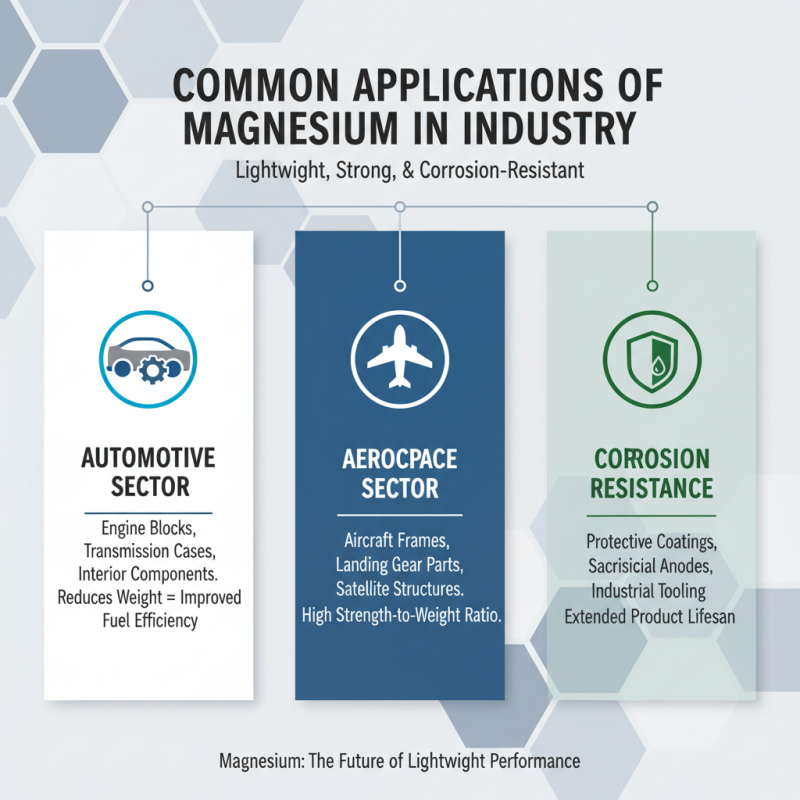
Common Applications of Magnesium in Industry
Magnesium is gaining traction in various industrial applications due to its impressive properties. Its low density and high strength make it ideal for lightweight components in the automotive and aerospace sectors. This metal is also highly resistant to corrosion, which extends the lifespan of products. For example, magnesium alloys are used in parts like engine blocks and transmission cases. These applications benefit from magnesium’s ability to reduce weight without sacrificing performance.
In electronics, magnesium is often used in device casings. Lighter devices mean more portability, which consumers appreciate. Moreover, it aids in heat dissipation, protecting sensitive components. The construction industry also uses magnesium for fireproofing and as a lightweight reinforced material. However, despite its advantages, there are challenges in recycling magnesium. Efficient processes are still being developed to fully utilize this valuable resource. Potential users must weigh these factors when considering magnesium for their applications.
Comparative Strength: Magnesium vs. Other Metals
Magnesium is gaining attention for its impressive strength-to-weight ratio. Recent studies indicate that magnesium alloys can achieve a tensile strength of around 300 MPa. This makes it comparable to aluminum but significantly lighter. In aerospace and automotive sectors, reducing weight while maintaining strength is crucial. Magnesium excels in this area, providing engineers with materials that enhance fuel efficiency without compromising structural integrity.
When compared to other metals, the advantages of magnesium become clearer. Steel generally offers high strength, often exceeding 400 MPa, yet it comes with a substantial weight penalty. Aluminum, while lightweight, typically has a weaker mechanical performance than magnesium. Companies are increasingly looking at magnesium as a viable alternative, particularly for applications requiring sophisticated designs and energy efficiency.
Challenges remain. Corrosion resistance is a concern. Magnesium is prone to corrosion, which limits its use in certain conditions. Innovative surface treatments are being researched to enhance durability and performance. These advancements will ultimately determine how widely magnesium can be adopted in demanding environments. Understanding these properties is key for industries aiming to optimize their material choices.
Comparative Strength: Magnesium vs. Other Metals
This chart displays the tensile strength of magnesium compared to other common metals, highlighting its competitive strength in comparison to aluminum, titanium, steel, and copper.
Future Trends in Magnesium Alloy Development in China
In recent years, China has experienced significant advancements in magnesium alloy development. Magnesium alloys are becoming increasingly popular due to their lightweight properties and strength. According to a report from the China Magnesium Association, the country's magnesium alloy production reached approximately 1.2 million tons in 2022. This growth underscores the rising demand in various industries, including automotive and aerospace.
Future trends indicate a strong focus on enhancing the mechanical properties of magnesium alloys. Research suggests that integrating rare earth elements can improve strength and corrosion resistance. A study published by the Beijing Institute of Technology emphasizes that these innovations could boost the performance of magnesium alloys in extreme conditions. However, challenges remain. The recycling of magnesium alloys is not yet widespread, and issues regarding their brittleness during processing require further exploration.
Data from the Institute of Metals and Materials Science highlights that the market for magnesium alloys in China could grow by over 10% annually. This growth hints at a promising future. Nevertheless, the industry faces obstacles, such as the need for improved production technologies and cost-effective processing methods. There is room for reflection on how to resolve these issues to fully harness the potential of magnesium alloys.

 High Quality
 High Performance
 Technology Support