2026 Best Patents on Neodymium Magnets for Global Buyers
Neodymium magnets sit at the center of modern motors, wind turbines, robotics, speakers, and compact medical equipment. Their strength enables smaller designs, but performance depends on alloy chemistry, grain structure, coating quality, and operating temperature. For global buyers, patent activity offers useful clues about these technical priorities. It does not provide a complete purchasing decision.
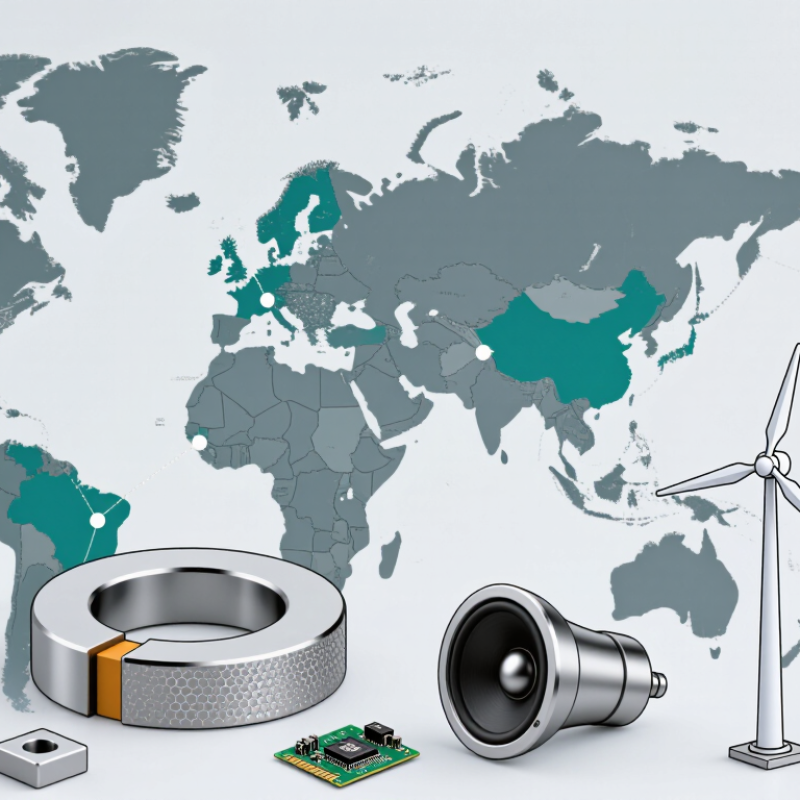
The International Energy Agency’s Global Critical Minerals Outlook 2025 reports that China remains the dominant processor of magnet rare earth elements. The report also highlights concentrated supply chains and growing demand from electric vehicles and clean-energy technologies. The U.S. Geological Survey’s Mineral Commodity Summaries 2025 confirms the strategic importance of rare-earth elements, including neodymium and praseodymium. These figures make intellectual-property screening more practical. They also make it more urgent.
As IEA Executive Director Fatih Birol stated, “The clean energy transition is moving from a fuel-intensive to a mineral-intensive system.” That observation applies directly to Patents On Neodymium Magnets. This guide examines patent families, assignees, filing jurisdictions, licensing signals, and application claims. It focuses on inventions involving high-temperature stability, corrosion-resistant coatings, recycling, reduced heavy-rare-earth content, and manufacturing efficiency. Patent databases can contain duplicates, abandoned applications, and broad claims. Patent counts alone can mislead. A strong-looking portfolio may still lack production capacity, freedom to operate, or reliable supply. Buyers should compare legal status with samples, audits, technical data sheets, and verified manufacturing records. Some conclusions will remain provisional, because patent information changes and classification systems are imperfect. That limitation deserves attention.
Neodymium Magnet Patent Landscape in 2026
The 2026 neodymium magnet patent landscape is shifting from basic composition toward efficiency, durability, and material conservation. Patent families increasingly cover grain boundary diffusion, reduced heavy rare-earth content, surface coatings, and improved recycling methods. These areas matter to buyers because they influence magnetic strength, corrosion resistance, supply stability, and production cost.
A careful review should compare claims, not merely patent titles. Examine priority dates, family members, expiration estimates, and legal status in each target market. Manufacturing patents may affect sintering temperatures, powder preparation, or diffusion depth. Application patents may focus on motors, sensors, speakers, or compact generators. That distinction matters. A patent active in one jurisdiction may be expired, abandoned, or irrelevant elsewhere.
Global buyers should request a documented patent screening before approving a new magnet specification. Search results can be incomplete. Machine translations can also distort technical meanings. A practical review combines patent databases, prosecution records, supplier declarations, and independent technical advice. Keep records of magnet grade, coating thickness, tolerances, and intended use. These details help connect a product to specific claims.
The landscape is not perfectly clear. Some overlapping claims appear broad at first but narrow during examination. Others remain difficult to interpret without specialized materials knowledge. Buyers should therefore treat patent mapping as a continuing process, not a one-time checklist. A strong assessment reduces uncertainty while leaving room for technical and legal review.
Core Technologies Covered by New Neodymium Magnet Patents
New neodymium magnet patents increasingly target performance, material efficiency, and supply resilience.
The International Energy Agency reported in Global Critical Minerals Outlook 2024 that one country produced about 94% of permanent magnets in 2022. This concentration raises procurement risks for global buyers.
Grain boundary diffusion
is a major patent theme. It places dysprosium or terbium near the magnet surface, improving heat resistance without filling the entire magnet with costly heavy rare earths. New claims also cover thinner diffusion layers, controlled grain shapes, and lower-temperature processing. The U.S. Department of Energy identifies neodymium, praseodymium, dysprosium, and terbium as critical materials for high-performance magnets. Small chemistry changes matter.
Recycling technologies are also moving forward.
Patents describe hydrogen-based powder treatment, separated rare-earth recovery, and recycled feedstock for sintered magnets. These methods may reduce mining pressure, but actual recovery rates depend on coatings, adhesives, and mixed scrap. That detail is often underestimated.
Surface coatings receive attention too, especially nickel-free barriers, corrosion-resistant layers, and improved bonding between coating and magnet. Buyers should examine working examples, not only broad claims. Patent strength can appear impressive while industrial repeatability remains uncertain. Adamas Intelligence’s rare earth magnet market analysis also highlights growing demand from electric vehicles, wind turbines, and industrial motors, where stable magnetic performance is essential. Test data under heat, humidity, vibration, and repeated cycling should guide purchasing decisions.
How Global Buyers Can Evaluate Patent Rights and Risks
2026 Best Patents on Neodymium Magnets for Global Buyers
A strong patent review begins with the claims, not the headline. Patent titles can sound broad, while independent claims may cover only a specific alloy, coating, grain structure, or manufacturing step. Buyers should record each patent number, filing date, priority family, owner, and current legal status. Small details matter.
Check the relevant countries before negotiating supply. A patent granted in one market may be pending, expired, or absent in another. Search official patent registers and compare family members for different claim wording. Then examine renewal payments, assignments, oppositions, and expiration dates. A live patent can still be commercially weak if its claims are narrow or difficult to enforce.
Request technical evidence from suppliers. Useful documents include material specifications, process flow charts, test reports, and declarations about licensed production. Compare those documents with the patent claims. Do not rely on a certificate alone. It proves rights, not freedom to operate. A clearance opinion from qualified counsel is valuable when importing magnets into several jurisdictions.
Patent searches are never perfect. Translation gaps and unpublished applications create uncertainty. I would leave a risk margin for this. Even experienced teams can miss a related continuation or a process patent. Recheck the portfolio before signing long-term contracts, especially after changing alloy composition, coating thickness, or production location.
2026 Best Patents on Neodymium Magnets for Global Buyers
How Global Buyers Can Evaluate Patent Rights and Risks
How to read this chart: These legal-time benchmarks help buyers screen neodymium-magnet technologies before licensing, sourcing, or entering a market. Patent publication normally occurs at 18 months, PCT national-phase entry is generally due at 30 or 31 months, and European opposition may be filed within 9 months after grant. The standard patent term is 20 years from the earliest effective filing date, subject to applicable adjustments and extensions.
Source basis: WIPO PCT Applicant’s Guide and patent-term guidance; European Patent Office Convention rules on opposition; standard international patent publication practice.